

The Archive02Transformation
Don Stylez
The PDF got a website around it.
The case that changed a service. A five-page electronic press kit, built properly and delivered on time — and out of date the month it shipped. It is why a press kit is a page now, with the same PDF downloadable from inside it.
- Artist
- Don Stylez — resident DJ, Miami
- Delivered
- Five-page EPK, screen and print
- Year
- 2025
- In this archive
- 6 pieces
01 — Before
Twelve megabytes, downloaded once.
The brief was an electronic press kit and the deliverable was correct: cover, biography, residencies, gallery, booking. Five pages, laid out to read on a phone and to print without falling apart, exported as a PDF an agent could attach to an email.
The file was right. What was wrong was that it was only a file. A press kit’s whole content is numbers that move — monthly listeners, venues played, this season’s routing — and a PDF holds every one of them at the hour it was exported. Six weeks later the artist is sending a booker a set of figures that are no longer his. The fix was not to stop making the file. It was to give it somewhere to live.

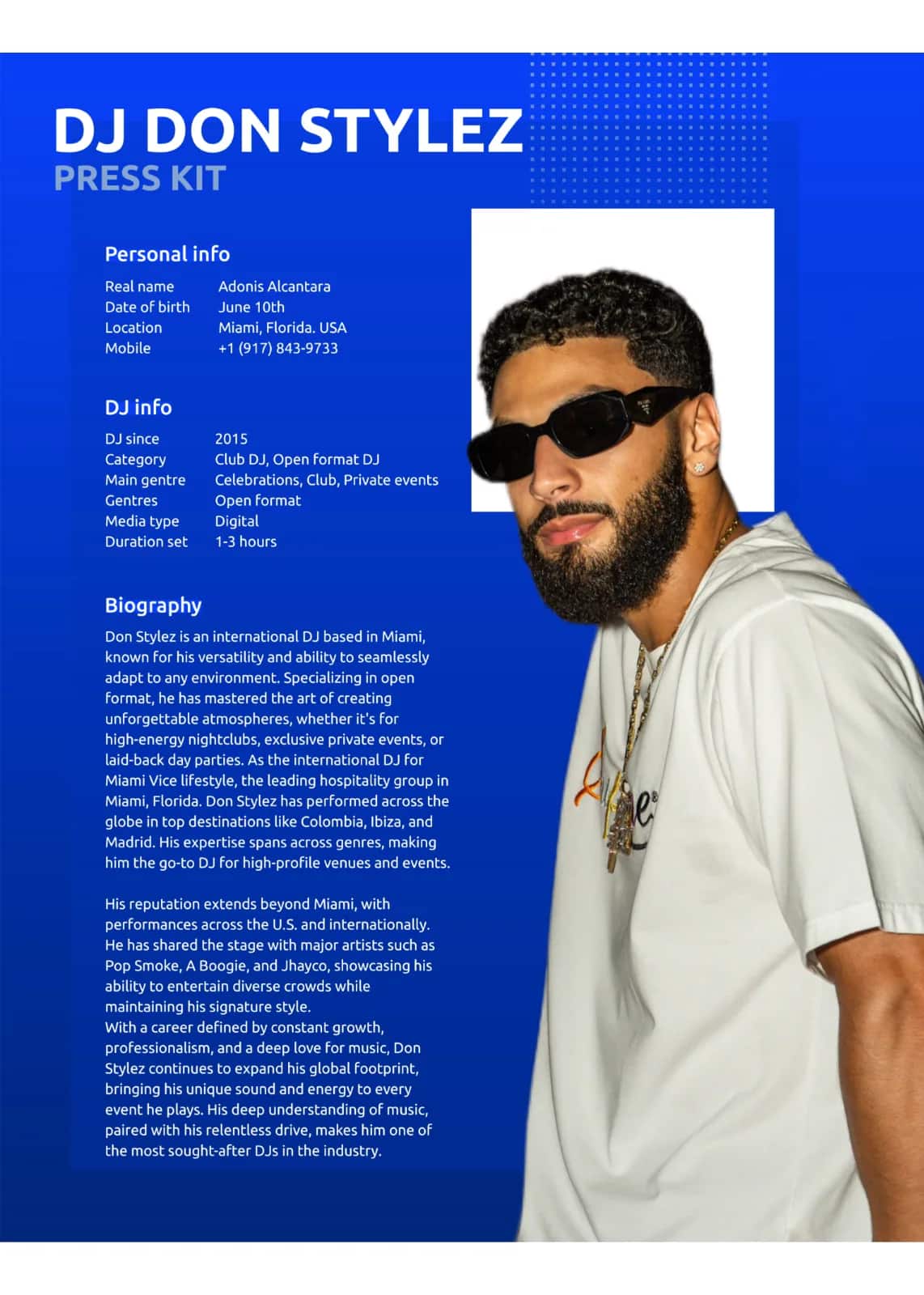
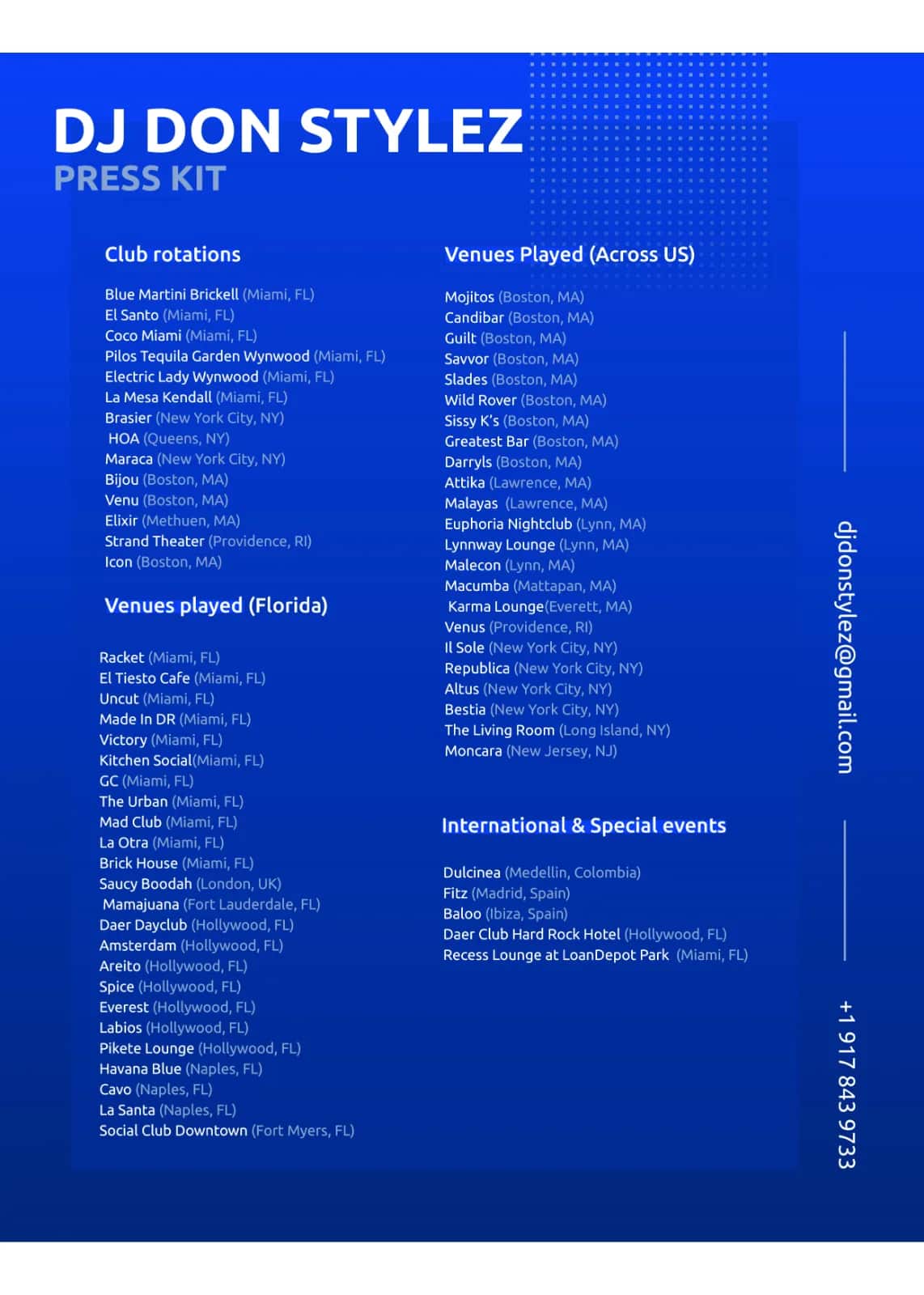
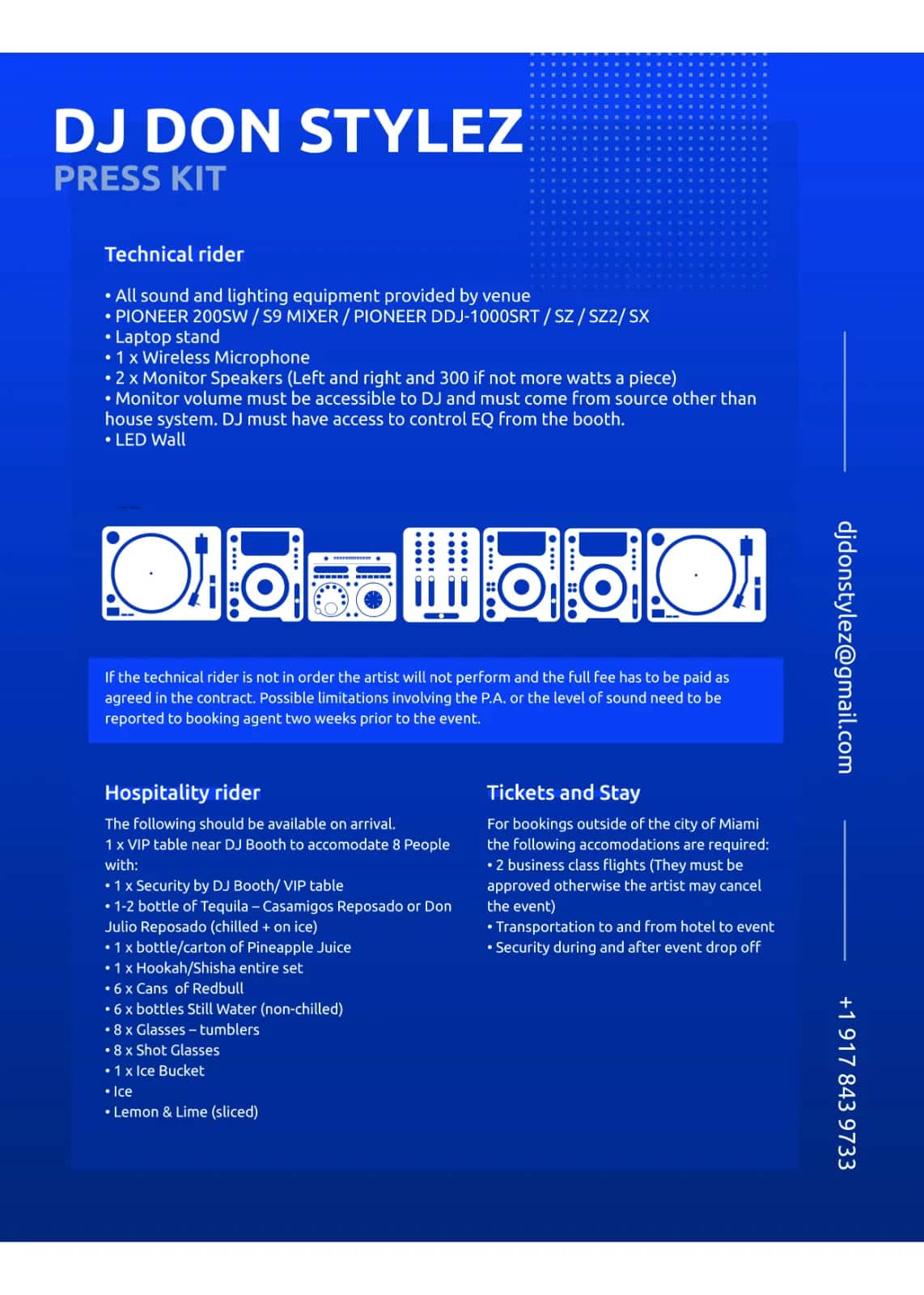
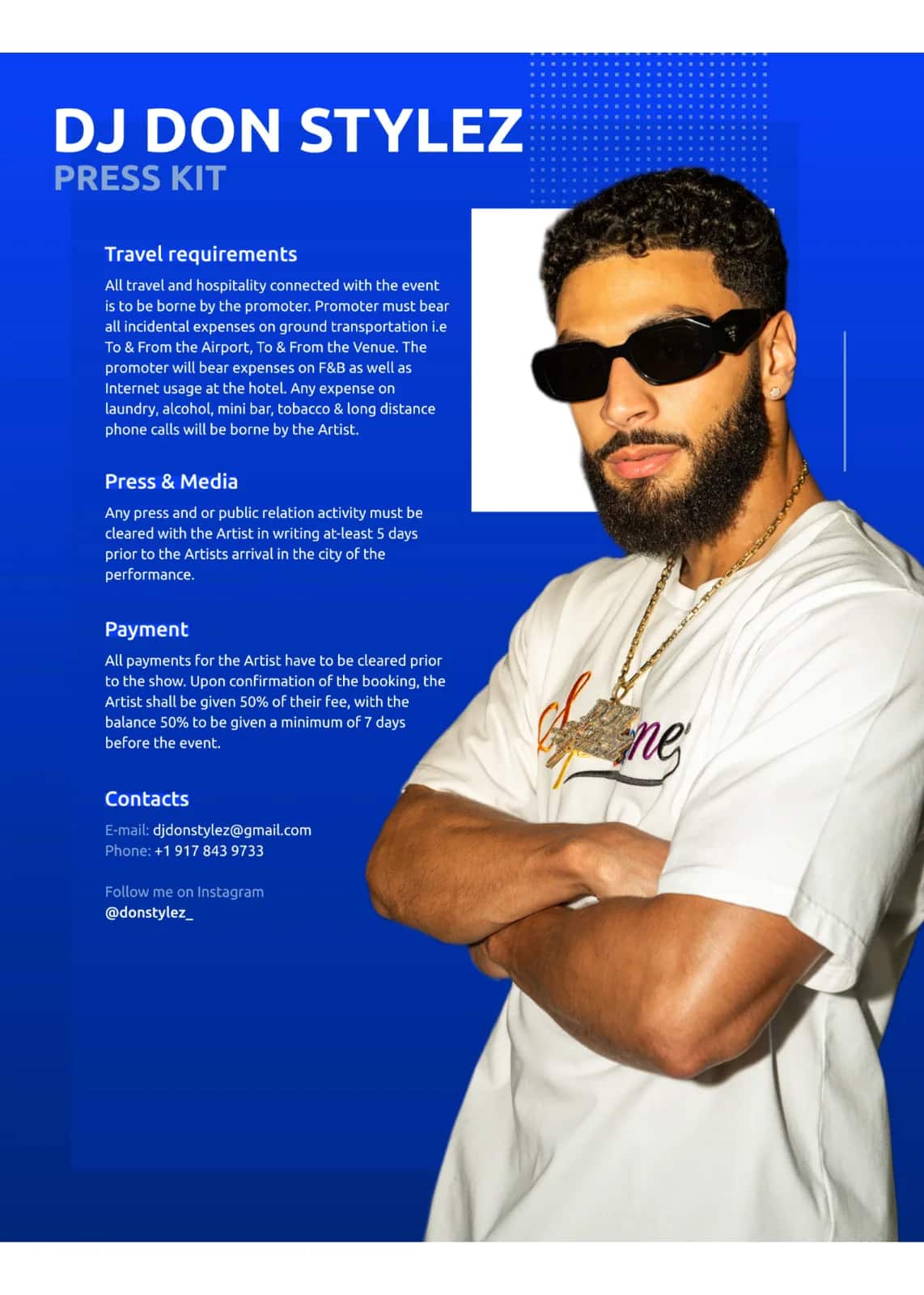
All five pages, exactly as they shipped — and exactly as they still read.
02 — What changed
Three moves.
In the order they were made. Everything the account looks like today falls out of them.
- 01
The same contents, on a link
Nothing in the kit was wrong — bio, venues, gallery, booking is exactly what a promoter opens the file for. All of it moved onto a page, where the listener count is today’s and the routing is this season’s, and where a residency changing on a Tuesday takes ten minutes rather than a re-export. The PDF is still there, generated from the page, so a booker who wants a file gets this month’s.
- 02
Typeset as a document, not as a poster
The replacement is deliberately not a club page. Cold graphite, one instrument cyan, a monospace setting every figure, and a catalog with the BPM and key columns a promoter actually scans. A document signals that its numbers are checkable. A poster signals the opposite.
- 03
A booking form replaced the email address
Date, city, venue, budget band, at the foot of the same page. The inquiry arrives already qualified instead of arriving as “hey, are you around in March”.
03 — After
The press kit, running.
KAYO is the built version, in the showroom and live. It is the reason a press kit is sold as a page now: the same five pages, current every time somebody opens them, with the file still downloadable for the booker who wants one.
The name on it and every number in it are invented — it is a showroom piece, not Don Stylez’s website. The argument it makes is not invented at all.

Every figure on it is live, the catalog is a real table with the technical columns, and the booking form answers with the routing. It is running in the frame above, not photographed.
New tab — this page stays open behind it.
04 — What it proves
And what this page will not claim.
01A service changed shape on the evidence
The PDF stopped being the product because of this file, not because of a trend. The archive is where the studio audits itself, and this is the entry where it lost an argument with its own back catalog.
02The client keeps the work
A page gets edited. A PDF can only be replaced, which in practice means it never is — the second version costs what the first one did and nobody ever commissions it.
03It costs more, and it is easier to sell
A press kit was a few hundred dollars; an artist website starts at the Launch tier. The gap is not hard to hold in a conversation, because one of them starts aging the hour it is exported and the other one is an address.
No booking figures, no streaming numbers, no before-and-after on either. Those belong to the artist and the studio does not hold them. What this page can do is put both objects side by side and let the comparison make the argument.
Next in the archive
JD WatchesA blank page became a brand.KAYO — the press kit, reborn.